
Troubling the Water:
The Urgent Work of Radical Belonging
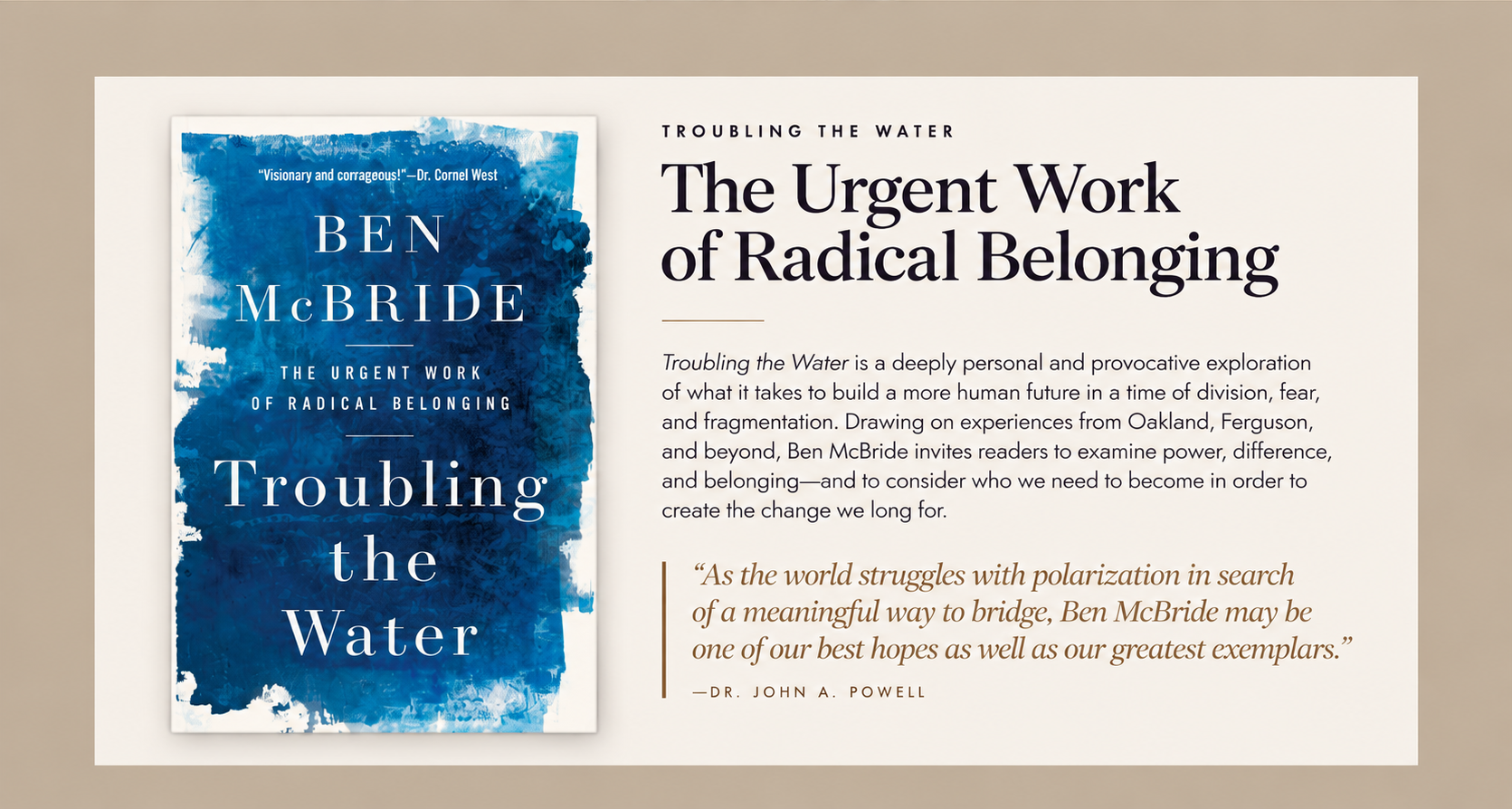
The book behind much of the work.
Troubling the Water is where I wrestle with many of the questions that continue to shape my leadership work today: how we understand power, how we respond to difference, what bridging actually requires, and why becoming often has to precede doing.
It is both a personal story and an invitation to think more deeply about who we become when the people around us see the world differently than we do.
Overview
Can you imagine a future that includes people who see the world very differently from you? If not, what happens next?
In Troubling the Water, Ben McBride draws on decades of experience working in communities, public systems, organizations, and movements to explore one of the most consequential leadership challenges of our time: how people move through deep difference without losing truth, trust, or the capacity to act together.
From Oakland to Ferguson and beyond, McBride reflects on what happens when fear, mistrust, power, identity, and competing realities collide. Rather than offering easy answers, he asks a harder question: what kind of people—and what kind of leaders—do we need to become in order to navigate conflict, build trust, and create the conditions for meaningful progress?
At the center of the book is McBride’s concept of radical belonging: the practice of widening the circle of human concern while remaining honest about power, responsibility, and harm. He examines the ways people “other” one another, how leaders can become trapped by their own assumptions, and why durable change requires more than good intentions or better strategy.
Troubling the Water is ultimately a book about leadership capacity.
It is about learning how to tell the truth without unnecessarily destroying relationship, how to engage difference without retreating into camps, how to exercise power responsibly, and how to stay connected to shared purpose when the pressure rises.
The book challenges a question many leaders instinctively ask:
What do we need to do?
McBride suggests there is another question that may matter just as much:
Who do we need to become in order to accomplish what we are trying to do?
For leaders, teams, and organizations navigating change, polarization, mistrust, or competing demands, Troubling the Water offers a framework for thinking differently about what makes progress possible—not by eliminating difference, but by building the capacity to move through it together.
CLICK TO BUY ON: